


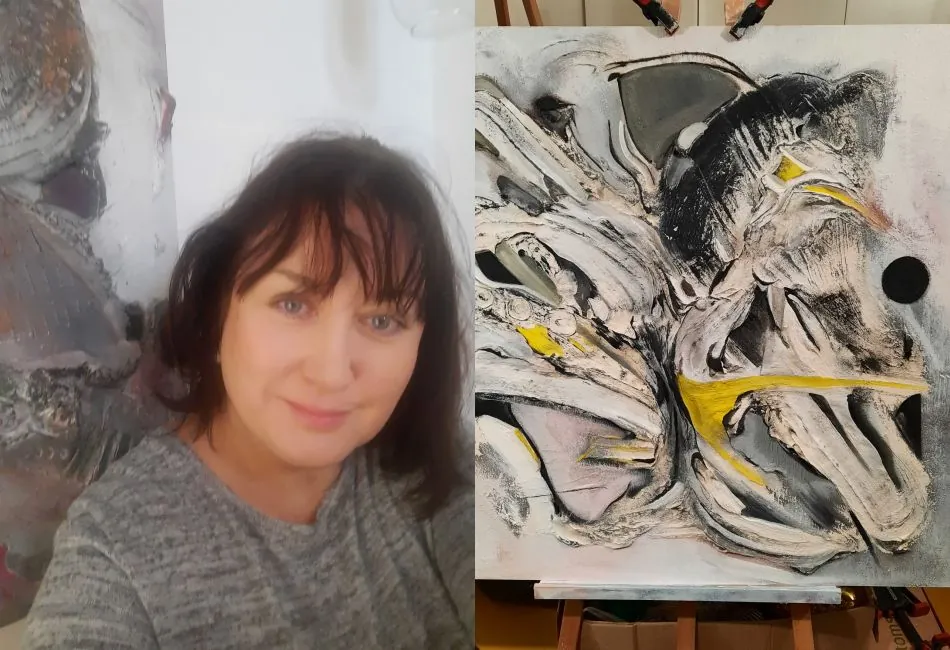
This conversation takes you to the very heart of Ana’s creative work, but also into her inner struggles — it leads you between Sarajevo and Zagreb, between the body and possibility, between a life that is sometimes fragile and an art that, from that very fracture, manages to create something entirely new…
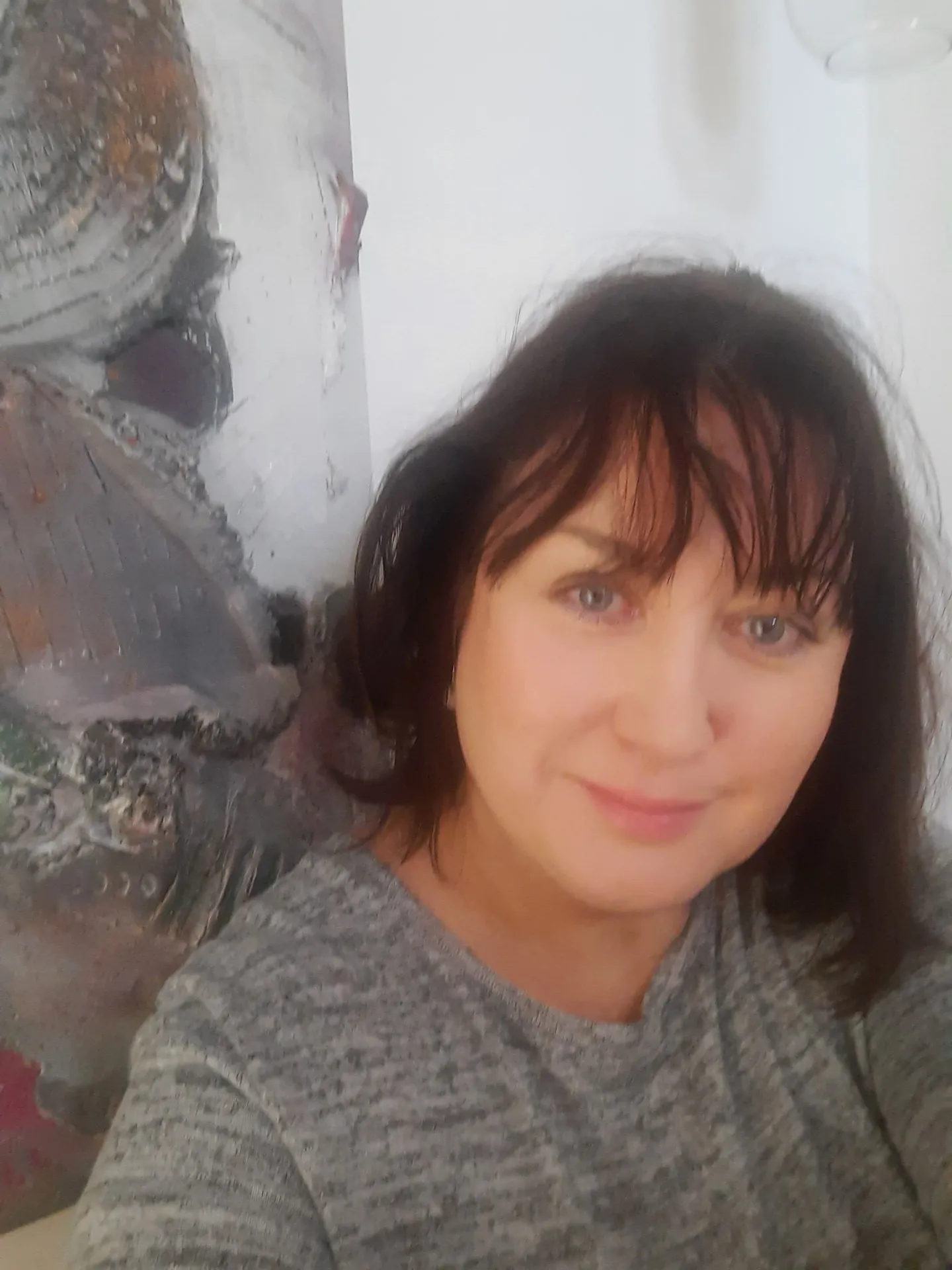
In a world where emotions are often hidden behind smooth surfaces and orderly lines, the art of Zagreb-based artist Ana Koncul feels like a brave breakthrough toward what is truly alive. Born in Sarajevo, shaped between two cities, two realities, and countless inner journeys, Ana creates works that are not merely visual — they are experiential. In her works, one can feel a pulse that belongs simultaneously to a child and a woman, to memory and the present, to struggle and tenderness. Through unusual materials, layers of paint, breathing reliefs, and traces that follow her personal transformations, Ana builds her own world: honest, textured, vulnerable, and tirelessly creative. This conversation leads you into the core of Ana’s artistic practice as well as her inner battles, guiding you between Sarajevo and Zagreb, between the body and possibility, between a life that is sometimes fragile and an art that succeeds in creating something entirely new from that fragility…
You were born in Sarajevo. How much did that city shape you and influence your art and creative work?
Sarajevo is my city of becoming, the city of my first breath, the city of my first step. The Sarajevo I remember is a heartbeat of diversity — living diversity — and as such, together with the family environment, that necessary habitus of personality, it initiated a process of observation, reflection, and the creation of one’s own insights, however immature or childlike they may have been. As such, now more mature but no less childlike, they live within me and through me. Defining art through the manifestation of beauty and creating a beautiful idea, a beautiful movement, a beautiful gaze, a beautiful image is a creative game in which the sum of childhood steps builds a broader picture — records like traces in my own or anyone else’s creative process.
In your childhood, due to health issues, you had to give up ballet and physical activities. How did that situation affect your growing up?
From today’s perspective, reflecting on my childhood, I would say I remember only happy days. The impossibility of one thing becomes the driver of another. My childhood was support and selfless love, and that is the only recipe that does not write situations or create influences with a negative sign. Of course, today I am a slower person, someone who could not keep up with friends in fast activities, but at the same time I was and remained someone who observes her surroundings and, in her own way, defines it visually — analyzing, connecting, assembling. My jumps and my running were rows of books, journals about what I read, building figures from paper and wire — figures from imagination.
Moving from Sarajevo to Zagreb, in the middle of the war, must certainly have been traumatic. What were your greatest challenges, and what did you carry from that change into your later visual expression?
War, as the peak of distorted consciousness — the peak of human despair — is a scar one carries; a scar you have and live with, and how much you allow it to be exposed in an individual depends either on you or on circumstances. In war, you question, you fear, you fight — every day is a challenge of survival. I carried those questions, fears, and resilience with me. They built new paths in the cities I love — paths that are interconnected, paths of maturation, paths of living. I would mention as an example two paintings recently exhibited in Vienna: My Heart and Birth. In them lies my personality — that heartbeat and the process of creation. Although different in energy, these paintings belong to the same inner world. Unusual materials play a key role in this. They not only build relief but also create a sense of presence. It is as if these two works exist between painting and sculpture. Such an approach allows emotion not only to be seen, but also physically experienced. The textures reveal the dynamics of inner processes: fractures, tensions, expansions, releases. Together, My Heart and Birth create a story of inner transformation — from feeling to emergence, from darkness to color, from closedness to openness. It is a story that reminds us that every process, no matter how messy or painful, leads toward something new. This is my story from Sarajevo to Zagreb — from me to this or that other version of myself. The answer is simple: I carried emotion with me — the transformation of a beginning into a new heartbeat.
A diagnosis of multiple sclerosis changed your life. How does living with MS reflect in your artistic work and creative process?
At one point, I said that life with multiple sclerosis begins the moment you embrace it and come to know your own capabilities. The struggle is daily — today you feel well, tomorrow you don’t. Every change in motor ability or cognitive fatigue is reflected in the creative process; another face of artistic work emerges. Perhaps this is precisely why my works speak so strongly on both a personal and a universal level. In them, I recognize my struggles, my beginnings, my possibilities.
Can you describe a moment or a work that is the result of your inner struggle — when illness helped you create something special?
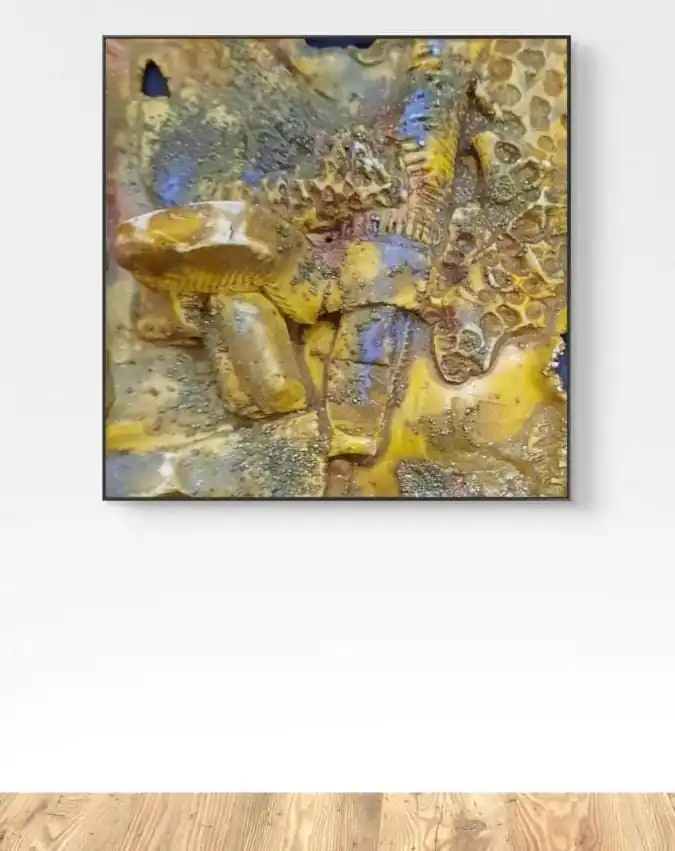
I would say a work rather than a moment. Although a moment conditions a work, and a work is the result of a moment. I am referring to the painting On the Yellow Trace, which was conceptually conceived long ago, while its realization unfolded in phases of self-discovery — as a way out of closed creative currents. In On the Yellow Trace, I build a layered and materially strong visual relief, in which color and structure transform into a semiotic record. The dominance of the yellow tone is not merely a chromatic choice, but a conceptual trace: yellow here functions as energy, pulse, a signal of presence and light, while simultaneously acting as a sediment of time that accumulates, disintegrates, and renews itself.
The relief surface, constructed through a mixed technique, reveals a process that is both intuitive and disciplined. The texture functions like an archaeological cross-section — within it one can read the geology of emotion, layers of memory, and fragile fragments of experience. Organic formations, uneven imprints, and microscopic details create the sense that the surface is alive, that it breathes, changes, and carries its own memory.
In this work, I am not concerned with narration in the classical sense, but with a visual topography that opens itself to the viewer as a space of independent interpretation. On the Yellow Trace becomes a map without a fixed destination — a path we follow by tracing color, matter, and intuition, all the way to the moment in which the viewer and the artwork connect in an intimate, quiet dialogue.
Blue, earthy, and metallic accents break the dominance of yellow, introducing rhythm and a subtle balance between lightness and weight, the organic and the mineral, inner impulse and outer manifestation. The work thus becomes a visual and tactile organism — open, fluid, processual. On the Yellow Trace is not merely a painting, but a space of becoming. It does not suggest a finished form, but duration: a trace that is not erased, but develops, transforms, and continues to live in the gaze of the observer.
In this sense, the painting is my trace within the space of my own transformation, for the creation of other records, imprints, traces. Sometimes, regardless of one’s health condition, an individual seeks their own coloration and transformation into a sign along their path. My earlier traces were a need to teach through working with children and young people, up to the moment when my own strength became stronger and more important than society’s recorded stereotypes about having a clearly defined goal by one’s late twenties. I agree with the beauty of an individual who feels their own purpose, but I would never diminish the constant need for change and new discoveries, because life itself is essentially a gift that should be followed by choosing one’s own light.
You have a very diverse body of work — from painting and abstraction, through sculpture, to unique lamps and tiles. What fulfills you more: creating for yourself or for others?
Thank you for noticing; my creative process is a leap from one field to another, following an invisible thread that connects everything into a single handwriting — and that is the mental process of dissolving the environment into fragments, symbols that analytically build a familiar theme into a transformed abstraction, visible through different perspectives, different viewpoints, starting points, and ultimately, experience.
Within this lies the power and beauty of significance — a white circle is a moon for one person, an island for another… Without insight, there is no understanding in everyday dialogue. And to simplify my answer: creating for others fulfills me the most, because it forms a kind of antagonistic pair to my own hand — while one muscle relaxes in motion, the other tightens and strains. Such is the connection between creating for others and for oneself — one cannot exist without the other.
How do you balance creative work with physical challenges? Do you have any rituals, habits, or a daily rhythm that help you stay productive even on more difficult days?
The only way is to know your own capabilities in relation to both your own expectations and those of your surroundings. Adaptation, adaptation, and nothing but adaptation is both the challenge and the solution. Perseverance is my strength — perseverance for others motivates me, bringing positive energy after a successful piece of work that has evoked emotion in someone else. A work is successful if it brings a smile, a sense of dynamism, relaxation — whatever the user of a given space truly needs.
In your life and art, you connect two cities: Sarajevo and Zagreb. How important is this dual identity for your artistic expression?
A dual identity is the duality of the same — a connection of the importance of existence. In my case, Sarajevo and Zagreb are inseparable parts of the bracelet of my personality, built from the already mentioned traces of moments lived so far. A person who does not accept existence within the circumstances of place, time, and moment does not possess a fully formed identity. Every segment has shaped me, and continues to shape me, and for that I am grateful. I believe that one’s personal identity forms artistic expression just as it forms any other kind of expression, making us distinct individuals within a multitude of characters, environments, and surrounding thoughts — and as such, it is immensely important.
Who is your greatest and unconditional support?
My greatest and unconditional support is my family: my mother and my husband — they are that nucleus you return to and depart from. The feeling that you matter to someone and that someone matters to you is the flicker of the day, a refuge where you bring yourself back to the right place.
If you had to describe your life through a single artwork you are most proud of, which would it be and why?
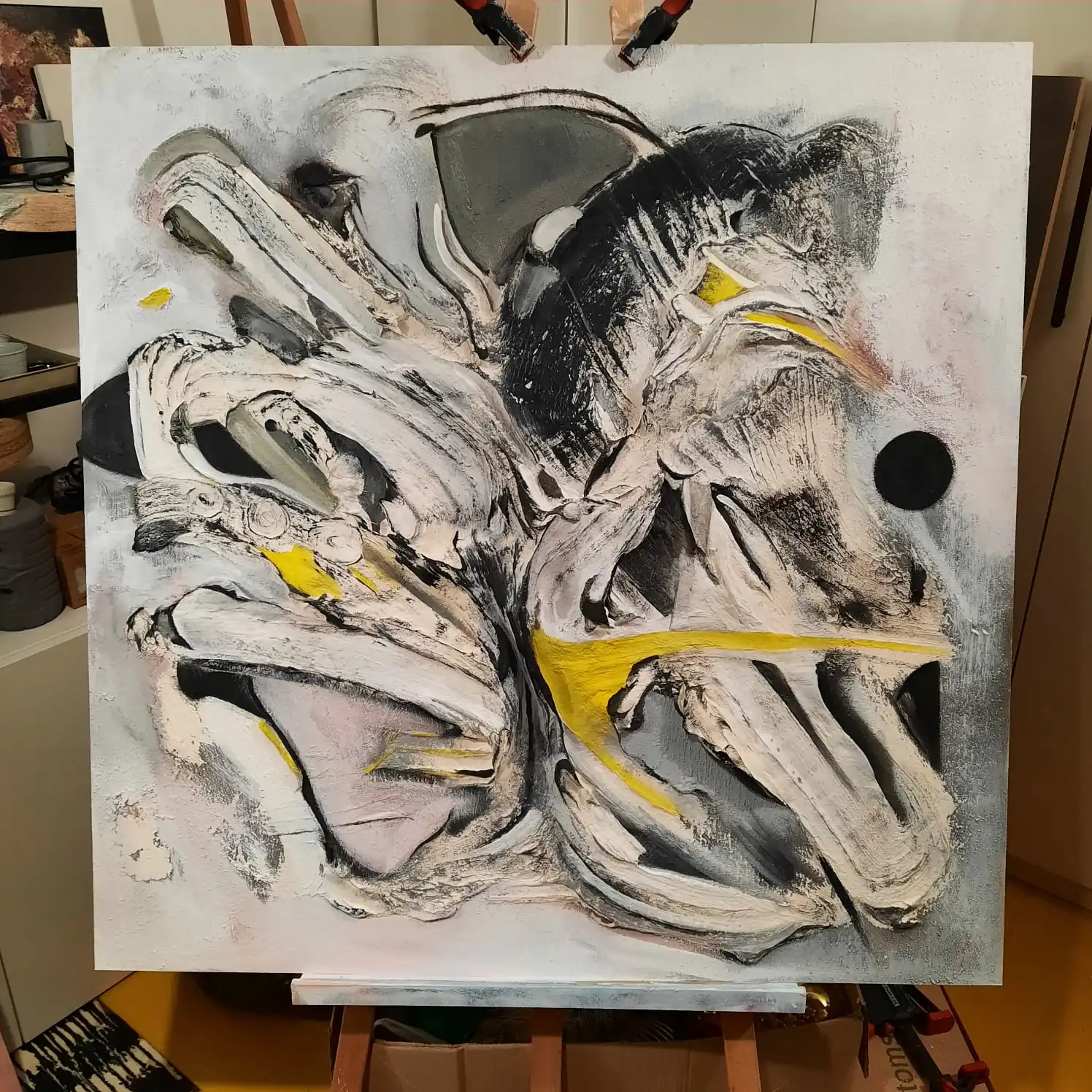
It is difficult for me to single out just one, because each of them represents a certain period within given circumstances. I will highlight a painting I created toward the end of my studies at the Academy of Fine Arts, at a time when I lost my brother and my father — a time when, through the motif of a bird, I was clearly searching for my own flight and a passage to another shore. It is the only painting I have repeated twice, and two years ago I exhibited it at a group exhibition in Milan under the title Bird O.
The second would be a life-size polyester sculpture made for RŠC Jarun in 2004–2005. The sculpture Handball Player follows movement and gesture, and connects the coloring in blue due to its association with purity on an analytical level, as well as with the blue flag of Jarun as a clean space for health, sport, recreation, and leisure. Unfortunately, during one event, irresponsible individuals destroyed my work, leaving the beach handball area stripped of the spirit of creativity.
Finally, the third work I would like to single out is Sonata — within it are form, contrast, and color; it is a dynamic whole that connects two loves: the love of shaping form and the role of color as an indispensable segment of existence. On a daily basis, we all exist within some form of coloration — from energetic yellow when everything is going well, to purple when we withdraw into the tones of the end of the day.
Photographs (Private Archive)
Text and photographs sourced from the portal: marieclaire.hr
Link to the original article:
https://marieclaire.hr/lifestyle/kultura/zagrepcanka-koja-umjetnicki-rukopis-prenosi-na-dizajnerske-predmete-zavirite-u-svijet-ane-koncul/